My son got his first girlfriend. I found myself feeling ‘flat’ (a default state for me if I’m feeling things I’m not aware of). I discovered I was feeling grief. Grief for the boy, the son for whom I was the most important woman in the world. This sat alongside great happiness and once I recognised and expressed the grief, the grief flowed through and passed, leaving just the happiness.
Grief is a natural emotion that arises in all of us at some point in our lives. None of us court it, we do not go looking for it, but it will often find us nonetheless. Grief is something I’ve explored deeply in my work both through Ayurveda, which understands grief as a disturbance of the heart and life-force, and through Shadow Work, which helps us meet the parts of ourselves that hold unprocessed sorrow.
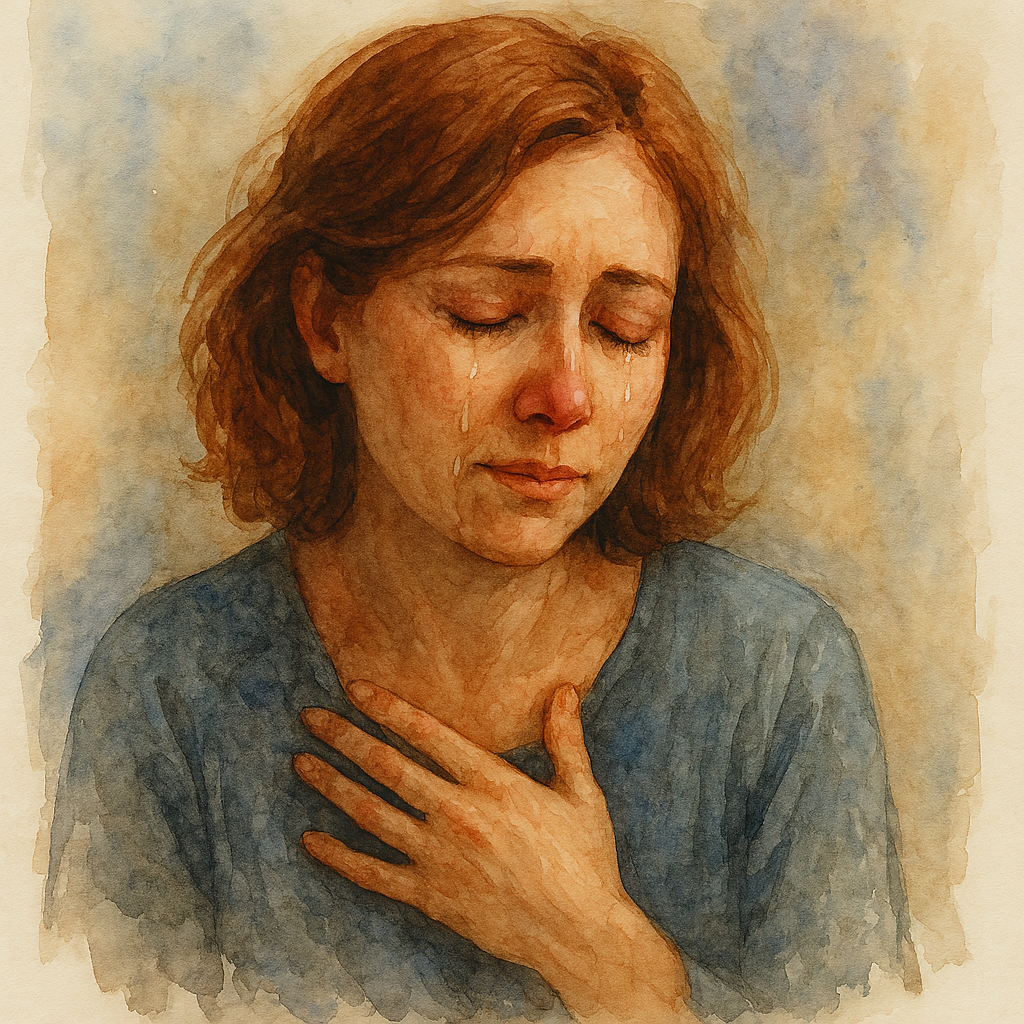
Grief is sadness at loss, but not always in the way you think
Grief, “very great sadness”, when someone has died is the most common experience of grief and this makes sense; death is such a dramatic and, depending on your world view, final loss. Grief can also arise when we lose people in other ways such as estrangement or moving away.
More subtle yet is the loss of someone without them physically leaving. My grief for my grandmother as she developed dementia started as I started to lose her as the person she once was. Others may experience grief for the ‘old father’ when a father remarries and is no longer the father he once was. When a mother gets a new job which causes her stress and takes more of her attention, a child may feel grief for the ‘old mother’.
Another layer to grief can be when we lose aspects or parts of ourselves. I moved from Japan to Germany at the age of eleven and had to become very worldly-wise very quickly. I have since learned that I carried grief for the playful, innocent child I was before the move. A painter who had to leave the career artist part of them behind when they had to change jobs to make more money can be left grieving that part of themselves.
Grief is natural – we all lose
All the examples above show how easy it is to lose, that it is an integral part of being a human being. Grief has the potential to arise at any time. The question is, how do we meet it?
This being human is a guest house.
Every morning a new arrival.A joy, a depression, a meanness,
some momentary awareness comes
as an unexpected visitor.Welcome and entertain them all!
Even if they’re a crowd of sorrows,
who violently sweep your house
empty of its furniture,
still, treat each guest honourably.
He may be clearing you out
for some new delight.(excerpt from The Guest House by Jalaluddin Rumi)
Many traditions, from ancient Ayurveda to modern Shadow Work, recognise that grief needs space to move. Do we allow this grief to flow through us, to express itself in whatever way it needs to take? Do we wail, do we cry, do we scream, do we fall to the floor? Do we have rituals and ceremonies to help us process the grief?
Or do we say ‘no’ to this uncomfortable feeling? Do we get busy and crack on? Do we deny its existence? Do we give ourselves a great spiritual talk about how this is all attachment and that really, the grief does not exist (although we are feeling it)?
The difference between these two approaches can significantly influence your future mental and physical health.
Tradition dictates that we must give grief full expression
Most cultures have rituals, rites of passage and traditions which help allow expression and movement of this grief. Funerals are a notable example of this, the coming together of a community to unite in and acknowledge loss, to say goodbye, to come together in song and give the bereaved a safe space to allow grief expression.

In South Africa, funerals extend to multi-day gatherings where grief continues to be shared and not kept private. In countries such as Japan, China and Mexico, regular annual rituals take place to make sure grief expression is not a one-chance affair, there are opportunities for shared grieving and ongoing connection with those who have been lost. Hindu and Greek Orthodox Christian traditions have set mourning periods and rituals which guide mourners through the process and offer meaning. Many populations not only allow but expect vocal wailing and loud lamentation.
In the UK and other Western countries, whilst some crying is expected at a funeral, that can sometimes be the limit of it and any more vocal or ongoing expression of grief is something for which people will feel is unacceptable and apologise.
The wisdom of all older traditions dictates that full expression is not only normal, but essential.
Not expressing grief can create mental and physical illness
Whether the grief is for the death of a loved-one or an aspect of yourself, denying, repressing or holding it at arm’s length can end up having some negative consequences. The natural flow of the energy can be halted, leading to stagnation. The energy it takes to lock that grief away can increase to the point where it is holding us back.
In Ayurveda, unprocessed grief is a potent factor in disease creation. It is described as ’the most potent force in causing aggravation of disease’.[1] It increases vata (the air and space elements within us) and by affecting the heart it also affects sadhaka pitta (a subtype of pitta– the fire and water elements) and reduces ojas (our vitality and immunity). This can lead to a variety of diseases and multiple studies in psychoneuroimmunology[2] have found that people with grief and prolonged grief disorder have altered cortisol responses, altered sleep, reduced immunity, increased clotting, elevated heart rate and blood pressure, fatigue, gastrointestinal problems, chest pain and inflammation.
Ayurveda and Shadow Work for grief
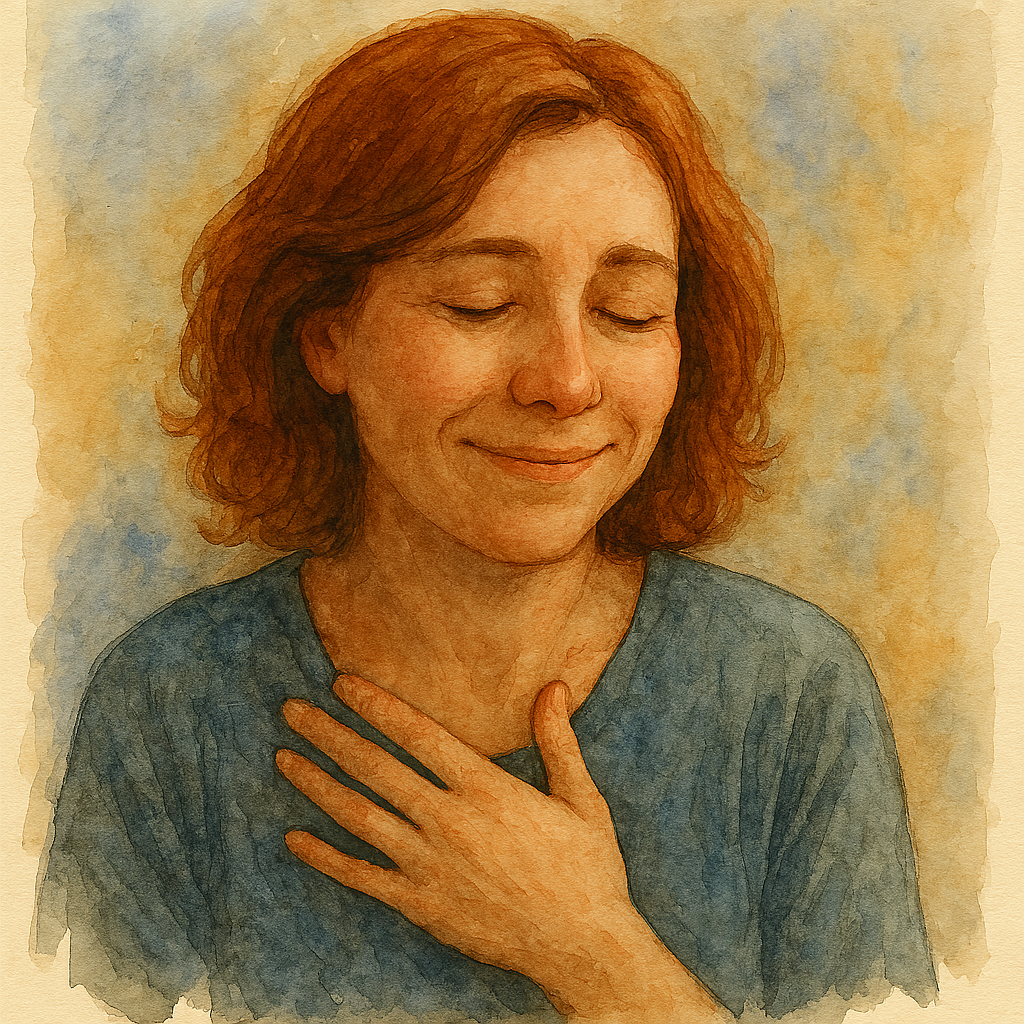
The first step, as with most things, is awareness. Becoming aware of what you are feeling.
Second, acknowledging that this is grief, this is sadness. You may not know what it’s about and it might not matter but often shows itself eventually.
From there, there can be expression. If you are a more feeling-type expressive person, you may find you skip the first two steps. If expression of this grief comes easily to you, allow it to continue, often in waves, until it passes. You might speak words, shed tears, move the body. Allow it all. Some people find deliberately putting on some sad music helps with this, connects you to that feeling part of you and allows the thinking, rationalising part to take a rest.
In Shadow Work, we work a lot with grief, often for loved ones but equally often with parts of ourselves. This work is deeply moving, often involving conversations with these lost loved ones, speaking and hearing what they have to say. This is immensely powerful in group processes as other people can represent these lost loved ones which brings even greater depth to the work. If Shadow Work for grief resonates with you, do join us for a Shadow Work weekend or some one-to-one work. You can also book in for a free exploration call if you want to check out if it is right for you.
In Ayurveda, there are herbs to support as we move with grief, such as saffron (Crocus sativus), brahmi (Bacopa monnieri), gotu kola (Centella asiatica), ashwagandha (Withania somnifera) and shankapushpi (Convolvulus pluricaulis). Do get in touch if you feel this approach would help you.
[1] Charaka Samhita Sutra Sthana 25/40:110
[2] “Bereavement and the Immune System” — Stroebe, Schut & Stroebe (2007), “Grief, Depression, and the Body” — O’Connor et al., Biological Psychiatry (2010), “Somatic Symptoms in Complicated Grief” — Shear et al., Depression & Anxiety (2011), “Physiological Effects of Bereavement” — Buckley et al., The Lancet (2012)



0 Comments